
 、
、
截至目前,引用Bioss产品发表的文献共37,152篇,总影响因子187,694.71分,发表在Nature, Science, Cell, Cancer Cell以及Immunity等顶刊的文献共130篇,合作单位覆盖了清华、北大、复旦、华盛顿大学、麻省理工学院、东京大学以及纽约大学等上百所国际研究机构。
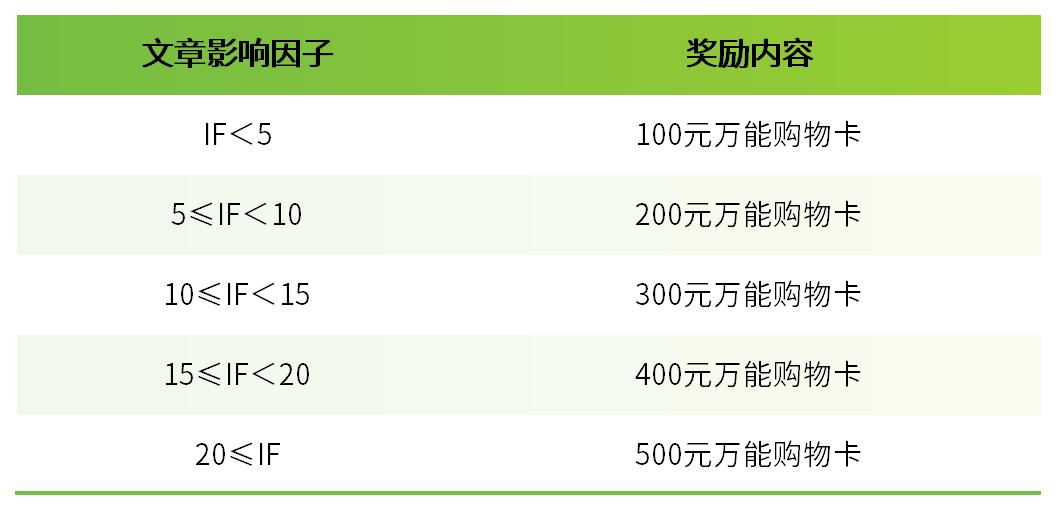
我们每月收集引用Bioss产品发表的文献。若您在当月已发表SCI文章,但未被我公司收集,请致电Bioss,我们将赠予现金鼓励,金额标准请参考“发文章 领奖金”活动页面。
本文主要分享7篇IF≥16的文献,它们引用了Bioss产品,分别发表在Science、Interdisciplinary Materials、Advanced Materials、Science Bulletin、Nature Microbiology、ACS Nano期刊上,让我们一起学习吧。
Science [IF=45.8]

文献引用产品:
bs-13620R | CLEC9A Rabbit pAb | WB
作者单位:西湖大学
摘要:
INTRODUCTION
Cross-presentation of tumor antigens by type I conventional dendritic cells (cDC1s) is essential for initiating CD8+ T cell–mediated antitumor immunity. Although cDC1s are equipped for this function, their cross-presenting ability is not intrinsic and depends on cues such as inflammatory signals or damage-associated molecular patterns. However, how tumor-derived signals regulate cDC1 function to shape CD8+ T cell priming remains unclear. In this work, we identified Ms4a7 as a key molecule up-regulated in cDC1s upon uptake of tumor materials and activation of nuclear factor κB signaling and demonstrated that Ms4a7 is required for effective CD8+ T cell cross-priming and antitumor immunity.
RATIONALE
cDC1s play a pivotal role in initiating CD8+ T cell–mediated antitumor immunity through cross-presentation of tumor antigens. However, the tumor microenvironment (TME) exerts complex influences on cDC1 function, modulating their capacity to prime T cells. In this study, we sought to identify key regulators induced by the tumor microenvironment that control cDC1 cross-presentation.
RESULTS
Ms4a7 is expressed in a subset of cDC1s within the TME and tumor draining lymph nodes (dLNs) in both mouse tumor models and human cancers, such as bladder urothelial carcinoma and cervical cancer. Ms4a7 localizes predominantly to intracellular vesicles involved in antigen processing and cross-presentation, and its deficiency impairs cDC1-mediated cross-priming of CD8+ T cells without affecting antigen uptake or degradation......
Interdisciplinary
Materials [IF=31.6]
文献引用产品:
bs-1134R | RUNX2 Rabbit pAb | IF
bs-10423R | Collagen I Rabbit pA | IF
作者单位:中国科学院上海硅酸盐研究所
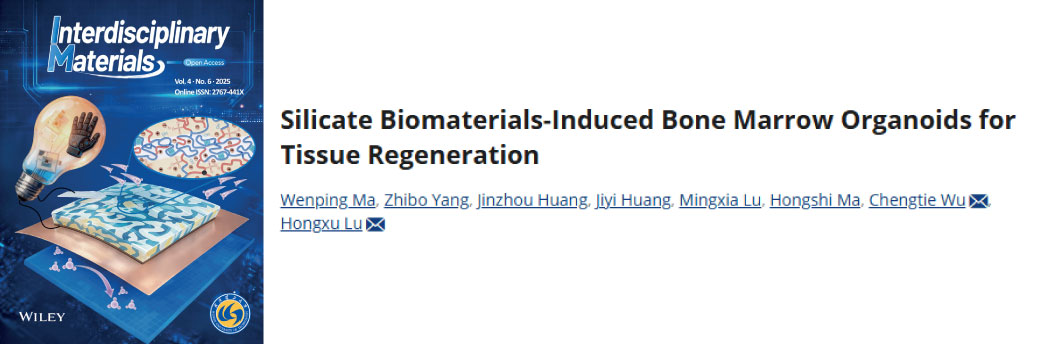
摘要:The bone marrow is essential for immune function, hematopoiesis, and skeletal system. The emergence of bone marrow organoids (BMOs) holds promise for addressing bone-related deficiencies, although maintaining BMOs homeostasis is still challenging, and their efficacy for tissue regeneration remains uncertain. Silicate biomaterials can provide distinctive biochemical clues by releasing bioactive ions, which are beneficial for regulating stem cell behaviors and developing cell functions. In this study, harnessing the bioactivities of silicate biomaterials, we engineered functional BMOs through the culture of mesenchymal stem cells (MSCs) and endothelial cells in a chemically defined medium, incorporating with calcium silicate nanowires (CS) and magnesium silicate nanospheres (MSS). The resulting BMOs demonstrated robust preservation of endothelial networks, increased self-renewal of the mesenchymal compartment, and positive effects on hematopoietic stem cells. Co-culture experiments revealed that the engineered BMOs can significantly improve the activities of chondrocytes, MSCs, and Schwann cells, which are pivotal for tissue regeneration. Furthermore, the silicate biomaterials upregulated gene expression and signaling pathways in the domains of osteogenesis and angiogenesis. In a rabbit osteochondral repair model, BMOs induced by MSS notably enhanced osteochondral regeneration. Our study reveals the critical role of silicate biomaterials in augmenting BMOs homeostasis and function, providing an innovative and compelling strategy for future tissue regeneration.
Advanced Materials [IF=26.8]

文献引用产品:
作者单位:北京大学口腔医学院
摘要:Targeted siRNA delivery has been widely used to regulate cell function. However, the rapid degradation of siRNA within macrophages upon delivery severely limits its utility for regulating macrophage function. Here, a novel technique is developed to compact large amounts of siAkt2 strands into delivery nanoparticles, to achieve massive and sustained intracellular release of siAkt2 that overwhelms the degradation capacity of macrophages. Microspheres of RNA complexes are prepared by rolling circle transcription. For better deliverability, siAkt2 microspheres are compacted by cholesterol-modified DNA, and encapsulated by Poly-(L-lactic acid) (PLLA). These PLLA-encapsulated siAkt2-compacted nanoparticles (siAkt2 RNP@PLLA NPs), each containing multiple repeated siAkt2 sequences, displayed long-term stability and maintenance of integrity within body fluids and acidic environments. Extensive endocytosis by RAW 264.7 is followed by continuous massive siAkt2 release into the cytosol, which significantly increased Akt2 gene silencing, metabolic reprogramming, as well as enhanced macrophage alternative polarization to the pro-regenerative M2 phenotype. Local administration of siAkt2 RNP@PLLA NPs in bone defects caused by periodontitis markedly induced macrophage alternative M2 polarization and enhanced bone regeneration. Therefore, the study provides a novel and highly efficient siRNA delivery system for regulating macrophage function, which can be a promising therapeutic strategy for enhancing tissue regeneration.
Advanced Materials [IF=26.8]

摘要:Controllable tissue expansion is critical in regenerative medicine to address skin or mucosal defects. Tissue expanders based on isotropic water filling or swelling offer a clinical solution but face challenges in addressing individual anatomical complexities. Here, a 4D printing biocompatible hydrogel expander with customizable designs is reported. Water-swellable polymer sheets with non-swellable elastomer frameworks are synthesized via digital photocuring. The sheets buckle upon adsorption of tissue fluids to execute anisotropic and programmable morphing, forming predesigned 3D structures with time as the fourth dimension for the shape changing. With an initial thickness of 1.0 mm, which is remarkably thinner than previous devices (typically 3–5 mm), the expander enabled minimally invasive implantation in the rat scalp. After 5 days’ implantation, the skin area and weight respectively increase to two and three folds without tissue damage, illustrating that the buckling-based strategy provides a safer yet accelerated expansion effect over previous devices. RNA sequencing indicates that the buckling-induced regeneration involving epithelial-to-mesenchymal transition (EMT) may be affected by the PI3K-AKT pathway. This work provides an inspiring strategy for personalized regeneration medicine.
Science Bulletin [IF=21.1]

文献引用产品:
摘要:Refractory wounds (RWs) are a common and severe complication of many diseases; however, the existing therapeutic methods are unsatisfactory in clinical practice. Here, we observed significant downregulation of the hepatocyte growth factor (HGF) in plasma samples from patients with autoimmune diseases. We used electroporation to deliver a plasmid containing HGF to induce its overexpression on mesenchymal stromal cells (MSCHGF) and loaded them into an injectable hydrogel to treat RWs in patients with clinical autoimmunity. The MSCHGF exhibited stable HGF expression and secretion. In addition, they displayed a self-reinforcing loop, enhanced migration, and improved anti-apoptosis capacity via the autocrine activation of the c-Met-mediated phosphatidylinositol 3-kinase (PI3K)-protein kinase B (AKT) signaling pathway. Furthermore, the HGF (as well as other bioactive factors) secreted from the MSCHGF significantly augmented the migration and angiopoiesis of vascular endothelial cells, decreased the cellular inflammation of macrophages, and improved extracellular matrix remodeling in fibroblasts. According to these features, we demonstrated that the MSCHGF-loaded injectable hydrogel boosted cellular functions and afforded a long-acting healing efficacy in the treatment of clinical autoimmune patients with RWs. Therefore, the genetically engineered MSCHGF and their dispersed hydrogel system will have clinical significance for wound therapy.
Nature Microbiology [IF=19.4]

文献引用产品:
AK352 | Alkaline Phosphatase Assay Kit | Other
作者单位:中国农业大学
摘要:Probiotics are promising alternatives to antibiotics for the treatment of intestinal infections, but the effects of probiotics alone are often insufficient. Here we uncovered synergism between antibacterial iron–sulfur nanozymes (nFeS) and tryptophan derivatives that protects mice and pigs against bacterial gut infections. nFeS selectively inhibited potential intestinal pathogens while sparing commensal Lactobacillus vaginalis, whose presence enhanced the protective activity of nFeS against Salmonella enterica subsp. Enterica serovar Typhimurium in vivo. Metabolomics and mutational analysis revealed that L. vaginalis synthesized 2-indolecarboxylic acid from a tryptophan derivative, indole-3-carboxaldehyde, a reaction that was catalysed by nFeS. The cytoplasmic pH of L. vaginalis (pH 7.5) allowed 2-indolecarboxylic acid to chelate free ferrous ions released by nFeS, thereby protecting it from antibacterial effects, whereas pathogens such as S. Typhimurium with a lower cytoplasmic pH were susceptible (pH 6.5). Pretreatment of pigs and mice with L. vaginalis and nFeS protected them against Salmonella infection. Our findings provide a foundation for improving probiotic bacteria-based therapies against intestinal infections.
ACS Nano [IF=16]
文献引用产品:
作者单位:上海交通大学医学院附属上海第六人民医院
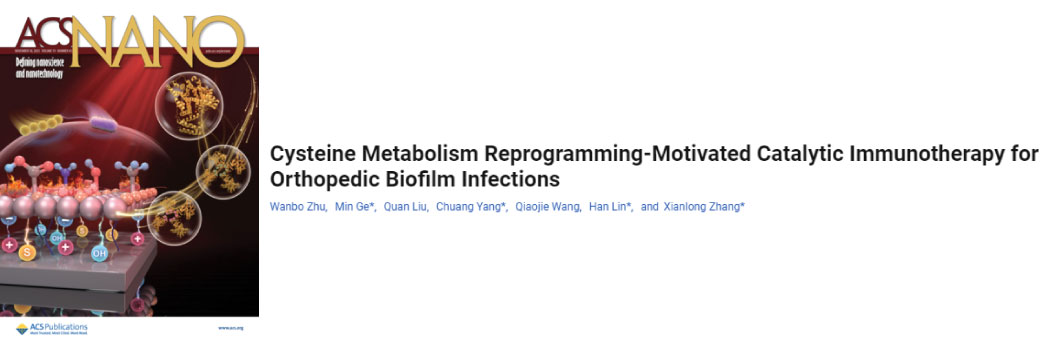
摘要:Immunotherapeutic strategies have proven to be very promising in the treatment of drug-resistant infections. However, breakthroughs against medical implant infections have been hampered by the presence of sophisticated bacterial biofilm defense barriers and suppressive immune cells at the biofilm–immune interface. Herein, we developed a nanointerfering catalyst (niCatalyst) for targeted modulation of cysteine metabolic processes in the biofilm–immune microenvironment (BIME). By releasing aurin tricarboxylic acid, the niCatalyst effectively blocked key enzymes involved in cysteine metabolism, thus limiting the production of hydrogen sulfide and glutathione in the biofilm defense barrier. Light-triggered burst catalysis of singlet oxygen further exacerbated the oxidative stress damage within the biofilm. Additionally, interference with cysteine metabolism inhibited cellular glutathione synthesis, leading to the enhancement of antimicrobial immune responses and antigen-presenting cell functions in macrophages. This, in turn, costimulated the immune functions of antibiofilm adaptive helper T cells and cytotoxic NK cells. In summary, our emerging niCatalysts enable reprogramming of cysteine metabolism in the BIME, as well as costimulation of innate and adaptive immunotherapy. This approach effectively eliminates drug-resistant biofilm infections with low metabolic activity, providing an alternative for metabolic immunotherapy in the postantibiotic era.